The Science
Sleep, Anxiety & Stress:
How does it affect the world?
SLEEP
-
Sleep disruptions and reductions throughout the world can be linked to today’s 24-hour society, evening-based entertainment lifestyles, shift work, and prolonged work hours is a modern problem (Motomura et al., 2013).
Poor sleep can become a life stressor, it has the links to aggravating inflammatory conditions, exacerbating hormonal imbalances, or provoking emotional dysregulation through ruminating worry, fear, anger, and avoidance. This causes an association of poor sleep with hypertension, compromised immunity, infections, weight gain, diabetes, depression, and anxiety. (Hinz et al., 2017).
Sleep is needed for immune system function and repair, metabolic balancing, glymphatic cleaning, emotional reactivity, mood regulation, effective cognitive functions, memory retention, and releasing trauma (Goldstein & Walker, 2014).
-
Insufficient sleep is a burden on the public health system, and is considered to be an epidemic that is linked to 7 out of the 15 leading causes of death in the USA (Chattu et al., 2018).
The American Academy of Sleep Medicine (AASM) and the Sleep Research Society (SRS) states the ideal sleep duration for adults aged 18 to 60 years old as more than 7 hours per night; whilst the National Sleep Foundation (NSF) recommends 7 to 9 hours of sleep for optimal sleep health in adults (Chattu et al., 2018).
In New Zealand, about 37% population get less than 7 hours of sleep per night (Lee and Sibley, 2019).
In Canada, about ⅓ of the adults within the population get less than 7 hours sleep per night (Dai et al., 2020).
A Netherlands study showed 43.2% of participants suffered insufficient sleep (Chattu et al., 2018).
A study indicated that 32.1% Austrians experience poor sleep (Hinz et al., 2017; Loeffler, 2015).
A Hong Kong study had similar result, with 39.4% citizens having poor sleep (Wong et al., 2011).
35.9% Germans also noted poor sleep (Hinz et al., 2017; Loeffler, 2015).
43.9% women and 23.6% men had severe problems falling asleep in Bangladesh (Stranges et al., 2012).
37.6% women and 28.5% men had severe problems falling asleep in Vietnam (Stranges et al., 2012).
-
It is within reason to recognise that sleep issues are a global problem. Sleep support and prevention methods could help reduce this impact and improve the quality of life people have.
ANXIETY
-
One in thirteen adults worldwide suffer from an anxiety disorder. It is the most prevalent mental illness globally and has a prominent impact on loss of health (World Health Organization 2021; Yang et al 2021).
20% of children/adolescents worldwide have a mental health condition with anxiety affecting 25% of this cohort (WHO, 2021).
In recent years there have been increased rates of Anxiety 6.33% to 50.9%, Psychological distress 34.4% to 38%, and Stress 8.1% to 81.9% (Xiong et al 2020; Gasteiger et al., 2021)
An estimated, 75% of those suffering from anxiety remain uncared for, especially in developed countries, with approximately 1 million individuals taking their lives each year (WHO, 2021)
-
There are an estimated 40 million adults in the US aged 18 or older that suffer from anxiety disorders yearly. This is equivalent to 18.1% of their population. (ADDA, n.d.)
In America, 38% of adults that are diagnosed with anxiety will have displayed symptoms by age 15. (Mathew et al., 2019)
Alongside this, 32% of american teenagers by 16 years old have exhibited anxiety at some point in their life. (Mathew et al., 2019)
A 2020/2021 survey showed that 9.6% adults experiencing psychological distress in last four weeks;
Whereas a 2019/2020 survey 7.4% adults experiencing psychological distress in last four weeks (Ministry of Health – 2020, 2021) ;
New Zealand was one of six countries projected to have more than half the population (47 to 55%) with a lifetime risk of a mental health disorder (Kessler et al., 2007);
Anxiety disorders account for 5.75% of NZ’s total burden of disease (GBD, 2019).
-
Regardless of where someone is located, anxiety disorders are problematic for a fairly large amount of people within a population. It is time to start thinking about new approaches that can support those that need it, and prevent the increasing number of people enduring them.
STRESS
-
The need to adapt in response to daily stressful experiences, can overload an individual’s biology, it has been recognised that prolonged stress impacts the biological system by pulling an individual’s biology further from homeostasis (Slavich & Shields, 2018).
-
In a 2017 national survey conducted by the American Psychological Association;
75% of Americans had experienced at least one symptom of stress in the last month.
The largest stressors were the future of the nation (63%), money (62%) and work (61%).
Another stress study by the American Psychological Association (2020) revealed;
78% of adults felt the coronavirus pandemic had become a significant source of stress.
Gen Z adults reported the highest stress levels, 6.1 out of 10.
87% of college students report their education being a significant source of stress.
More statistics on stress in the USA shows (Patterson, 2022);
77% of Americans experience stress that affects their physical health.
73% of people experience stress that impacts their mental health.
48% of people have difficulties sleeping due to stress.
91% of Australians feel stress in at least one important aspect of their lives, with an average of 3.2 days spent absent from work due to stress (Global Organization for Stress, n.d.).
Prevalence of stress experienced in populations (Mahmud et al., 2021)
China (46.5%)
Egypt (76.6%)
India (52.8%)
Spain (55.2%)
A Canadian study conducted reported that 44.5% first responders had one or more mental health disorders (Carleton et al., 2018).
A UK study revealed that 74% of people within the population have felt stressed or overwhelmed (Mental Health Foundation, 2018).
-
Stress has a global influence on the wellbeing and quality of life people are experiencing daily. It is an issue that needs to be supported, and reframed as serious.
-
ADAA: Anxiety & Depression Association of America (n.d.). Facts & statistics. Retrieved May 27 2022 from https://adaa.org/understanding-anxiety/facts-statistics Alonso, J., Liu, Z., Evans-Lacko, S., Sadikova, E., Sampson, N., Chatterji, S., & Thornicroft, G. (2018). Treatment gap for anxiety disorders is global: Results of the World Mental Health Surveys in 21 countries. Depression and Anxiety, 35(3), 195-208. doi:10.1002/da.22711 American Psychological Association (APA) (2017). Stress in America: The state of our nation. Stress in America Survey. Retrieved December 16 2021 from https://www.apa.org/news/press/releases/stress/2017/state-nation.pdf American Psychological Association (APA) (2020). Stress in America: A National Mental Health Crisis. Stress in America Survey. Retrieved May 27 2022 from https://www.apa.org/news/press/releases/stress/2020/report-october Carleton, R. N., Afifi, T. O., Turner, S., Taillieu, T., Duranceau, S., LeBouthillier, D. M., Sareen, J., Ricciardelli, R., MacPhee, R. S., Groll, D., Hozempa, K., Brunet, A., Weekes, J. R., Griffiths, C. T., Abrams, K. J., Jones, N. A., Beshai, S., Cramm, H. A., Dobson, K. S., Hatcher, S., Keane, T. M., Stewart, S. H., & Asmundson, G. J. G. (2018). Mental disorder symptoms among public safety personnel in Canada. The Canadian Journal of Psychiatry, 63(1), 54–64. doi:10.1177/0706743717723825 Chattu, V. K., Manzar, M. D., Kumary, S., Burman, D., Spence, D. W., & Pandi-Perumal, S. R. (2018). The Global Problem of Insufficient Sleep and Its Serious Public Health Implications. Healthcare (Basel, Switzerland), 7(1), 1. https://doi.org/10.3390/healthcare7010001 Dai, H., Mei, Z., An, A., Lu, Y., & Wu, J.H. (2020). Associations of sleep problems with health-risk behaviors and psychological well-being among Canadian adults. Sleep Health: Journal of the National Sleep Foundation, 3(4), 1-5. Gasteiger, N., Vedhara, K., Massey, A., Jia, R., Ayling, K., Chalder, T., & Broadbent, E. (2021). Depression, anxiety and stress during the COVID-19 pandemic: results from a New Zealand cohort study on mental well-being. BMJ Open, 11(5), e045325. doi:10.1136/bmjopen-2020-045325 GBD 2019 Viewpoint Collaborators (2020). Five insights from the Global Burden of Disease study 2019. The Lancet, 396(10258), 1135-1159. doi:10.1016/S0140-6736(20)31404-5 Global Organization for Stress (n.d.). Stress facts: Stress related facts and statistics. Retrieved December 16, 2021 from http://www.gostress.com/stress-facts/ Goldstein, A. N., & Walker, M. P. (2014). The role of sleep in emotional brain function. Annual Review of Clinical Psychology, 10, 679-708. doi:10.1146/annurev-clinpsy-032813-153716
Hinz, A., Glaesmer, H., Brähler, E., Löffler, M., Engel, C., Enzenbach, C., Hegerl, U., & Sander, C. (2017). Sleep quality in the general population: psychometric properties of the Pittsburgh sleep quality index, derived from a German community sample of 9284 people. Sleep Medicine, 30, 57-63. doi:10.1016/j.sleep.2016.03.008 Kessler, R. C., Angermeyer, M., Anthony, J. C., R, D. E. G., Demyttenaere, K.,Gasquet, I., & Ustün, T. B. (2007). Lifetime prevalence and age-of-onset distributions of mental disorders in the World Health Organization's World Mental Health Survey Initiative. World Psychiatry, 6(3), 168-176. Lee, C. H., & Sibley, C. G. (2019). Sleep duration and psychological well-being among New Zealanders. Sleep Health, 5(6), 606–614. doi:10.1016/j.sleh.2019.06.008 Loeffler, M., Engel, C., Ahnert, P., Alfermann, D., Arelin, K., Baber, R., & Thiery, J. (2015). The LIFE-Adult-Study: objectives and design of a population-based cohort study with 10,000 deeply phenotyped adults in Germany. BMC Public Health, 15(1), 691. doi:10.1186/s12889-015-1983-z Mahmud, S., Hossain, S., Muyeed, A., Islam, M. M., & Mohsin, M. (2021). The global prevalence of depression, anxiety, stress, and, insomnia and its changes among health professionals during COVID-19 pandemic: A rapid systematic review and meta-analysis. Heliyon, 7(7), e07393. Mathew, G. M., Li, X., Hale, L., & Chang, A. M. (2019). Sleep duration and social jetlag are independently associated with anxious symptoms in adolescents. Chronobiology International, 36(4), 461–469. doi:10.1080/07420528.2018.1509079 Mental Health and Illness (2020). Canterbury District Health Board: Community and Public Health. Retrieved from https://www.cph.co.nz/your-health/mental-illness/ Mental Health Foundation. (2018). Mental health statistics: stress. Retrieved May 27, 2022 from https://www.mentalhealth.org.uk/statistics/mental-health-statistics-stress Ministry of Health. (2020) .Annual update of key results 2019/20: New Zealand Health Survey. Retrieved September 25, 2021 from https://www.health.govt.nz/publication/annual-update-key-results-2019-20-new-zealand-health-survey Ministry of Health. (2021). Annual Data Explorer 2020/21: New Zealand Health Survey. Retrieved December 13, 2021 from https://minhealthnz.shinyapps.io/nz-health-survey-2020-21-annual-data-explorer/ Motomura, Y., Kitamura, S., Oba, K., Terasawa, Y., Enomoto, M., Katayose, Y., Hida, A., Moriguchi, Y., Higuchi, S., Mishima, K. (2013). Sleep debt elicits negative emotional reaction through diminished amygdala-anterior cingulate functional connectivity. PLoS ONE 8(2), e56578. doi:10.1371/journal.pone.0056578 Patterson, E. (2020). Stress Facts and Statistics. The Recovery Village. Retrieved May 27, 2022, from https://www.therecoveryvillage.com/mental-health/stress/stress-statistics/
Slavich, G. M., & Shields, G. S. (2018). Assessing lifetime stress exposure using the stress and adversity inventory for adults (Adult Strain): An overview and initial validation. Psychosomatic Medicine, 80(1), 17–27. doi:10.1097/PSY.0000000000000534 Stevelink, S. A. M., Opie, E., Pernet, D., Gao, H., Elliott, P., Wessely, S., Fear, N. T., Hotopf, M., & Greenberg, N. (2020). Probable PTSD, depression and anxiety in 40,299 UK police officers and staff: Prevalence, risk factors and associations with blood pressure. PLoS One, 15(11), e0240902. doi:10.1371/journal.pone.0240902 Stranges, S., Tigbe, W., Gómez-Olivé, F. X., Thorogood, M., & Kandala, N. B. (2012). Sleep problems: an emerging global epidemic? Findings from the INDEPTH WHO-SAGE study among more than 40,000 older adults from 8 countries across Africa and Asia. Sleep, 35(8), 1173–1181. doi:10.5665/sleep.2012 WHO: World Health Organization. (2021). Mental health. Retrieved October 20 2021, from https://www.who.int/health-topics/mental-health#tab=tab_1 Wong, W. S., & Fielding, R. (2011). Prevalence of insomnia among Chinese adults in Hong Kong: a population‐based study. Journal of sleep research, 20(1pt1), 117-126. Xiong, J., Lipsitz, O., Nasri, F., Lui, L., Gill, H., Phan, L., Chen-Li, D., Iacobucci, M., Ho, R., Majeed, A., & McIntyre, R. S. (2020). Impact of COVID-19 pandemic on mental health in the general population: A systematic review. Journal of Affective Disorders, 277, 55–64. doi:10.1016/j.jad.2020.08.001 Yang, X., Fang, Y., Chen, H., Zhang, T., Yin, X., Man, J., ... & Lu, M. (2021). Global, regional and national burden of anxiety disorders from 1990 to 2019: results from the Global Burden of Disease Study 2019. Epidemiology and psychiatric sciences, 30.
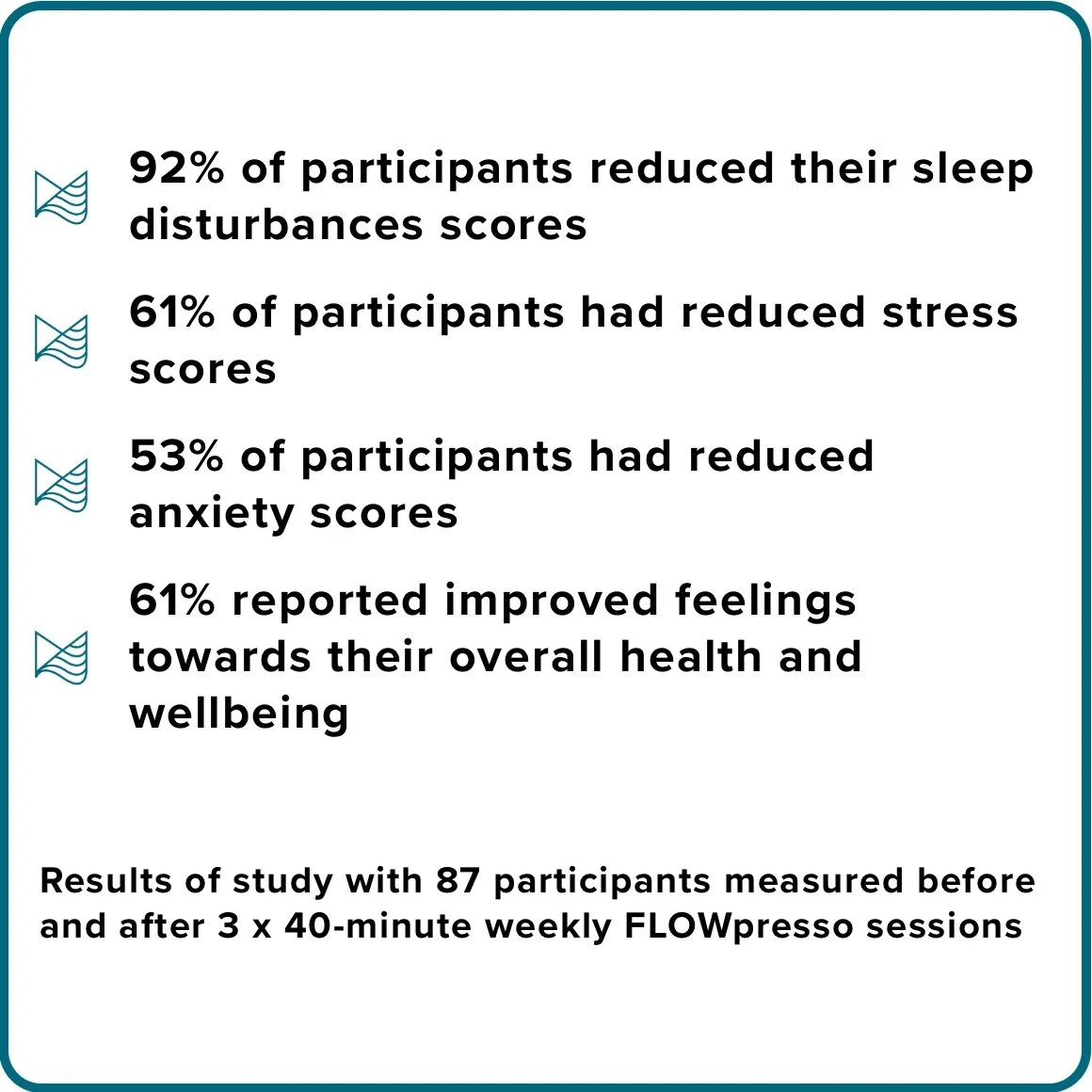
Flowpresso Statistics: